EXPERT ARTICLE
5 VDP merchandising mistakes that quietly
cost deals and how to fix them

Dealer profitability is being compressed from all sides. Used vehicle supply is tightening, affordability is stretched, and competition is intensifying across every channel. When profitability gets squeezed, dealers tend to pull the familiar levers: adjust pricing strategy, add incentives, or increase ad spend.
But one of the biggest threats to margin most dealers aren’t looking at doesn’t show up in the media budget or the desk log. It’s hiding in your Vehicle Detail Pages (VDPs).
Today’s shoppers interact with 62 digital touchpoints1 and spend more than half their buying journey researching before contacting a dealership2. By the time someone lands on your VDP, they’ve already compared vehicles, evaluated pricing, and formed an opinion about your store.
When a listing falls short, every unanswered question about condition, pricing, or dealership credibility becomes a reason to push back. Most of these gaps are fixable, and closing them requires more intention, not more spend.
With AI-powered tools increasingly surfacing inventory before a shopper ever clicks a listing, the quality of your merchandising now determines whether you even show up in the consideration set.
Here are five VDP merchandising mistakes most likely to be costing you, and how to fix them.
Mistake #1 Letting your photo gallery work against you
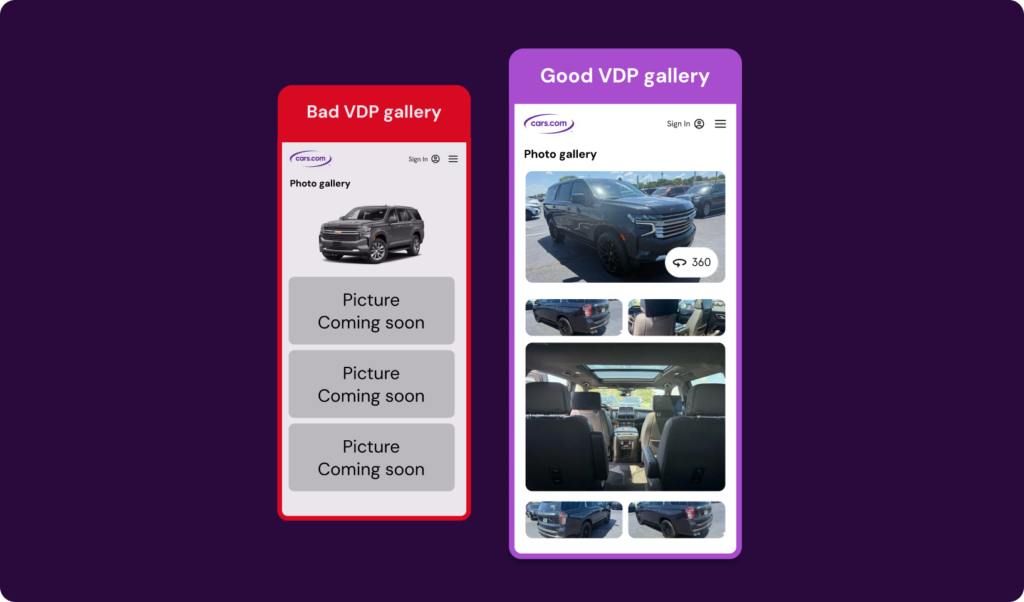
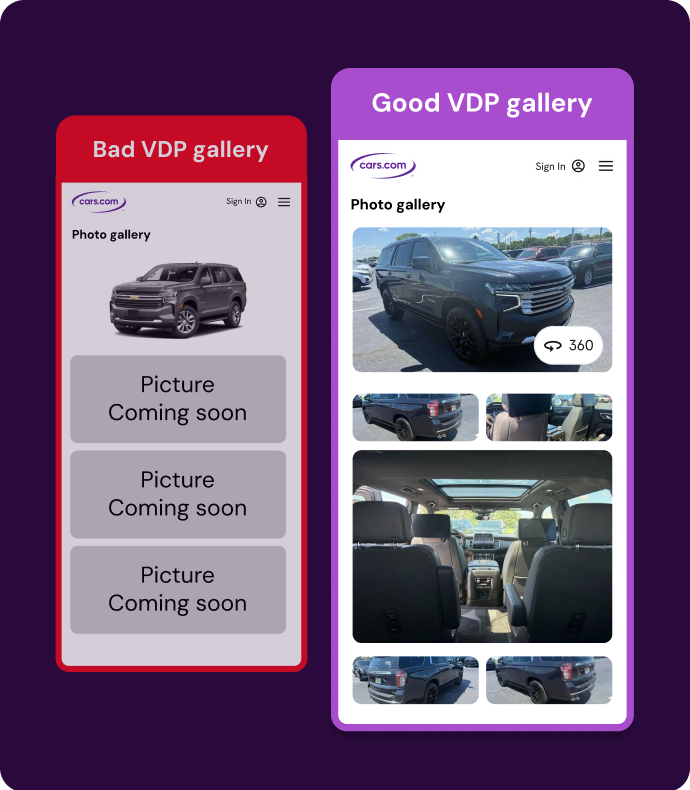
A VDP gallery should build conviction. When done well, photos communicate value, highlight features, and build trust before the shopper ever visits the lot. However, if done poorly, they can create doubt.
Common dealership photo mistakes:
- Used vehicles listed online before photos have been taken
- Galleries that lead with generic exterior angles
- High-value features left unphotographed
- Imperfections are hidden instead of disclosed
That last one deserves emphasis. Photographing a door ding or bumper scuff is one of the most trust-building moves a dealer can make. A shopper who sees the flaw online isn’t surprised on the lot, and fewer surprises mean fewer renegotiations.
How to fix it
- Photograph the actual VIN before listing a used vehicle online
- Aim for 25–35 high-quality photos per listing
- Lead with value-driving features like upgraded interiors, infotainment, or panoramic roofs
- Include interior, exterior, cargo, wheels, and technology features
- Add 360° spins or walkaround video when possible
- Clearly document visible imperfections

Takeaway: The goal isn’t perfection — it’s transparency. When the vehicle a shopper finds online matches what they find in person, they arrive confident that the price is fair.
Mistake #2 Writing descriptions that list features instead of
building value
Most shoppers don’t understand trim hierarchies or package structures. They can’t look at “EX-L AWD” and instantly understand why it costs $4,000 more than the listing below it.
The VDP description is your opportunity to translate specs into value. However, most listings read as if they were written for an inventory feed rather than real shoppers.
Common description issues include:
- Generic titles that ignore trim packages
- Walls of text that are difficult to scan on mobile
- Feature lists without explaining why they matter
- No narrative explaining why the vehicle is a strong buy
How to fix it
Lead with what matters most for the vehicle type. For example, include range for EVs, towing for trucks, and safety ratings for family SUVs. Then translate features into real-world benefits.
For example:
| What not to do | What to do |
|---|---|
| LTHR SEATS, 18” ALLOYS, PREMIUM AUDIO | “Leather-trimmed seating that adds a premium feel to every drive.” |
| LTHR SEATS, 18” ALLOYS, PREMIUM AUDIO | “18-inch alloy wheels that enhance both style and performance with a confident, road-ready stance.” |
| LTHR SEATS, 18” ALLOYS, PREMIUM AUDIO | “A 12-speaker premium audio system that makes the daily commute feel like front-row seats.” |
It’s also important to write descriptions that work for search engines and AI tools, not just humans. Nearly half of today’s buyers are influenced by AI tools at some point in their journey3, and vague listings are less likely to surface in those results. Specific, benefit-driven copy serves the algorithm and the reader.
Takeaway: Your VDP description should help shoppers understand why the vehicle is worth the price.
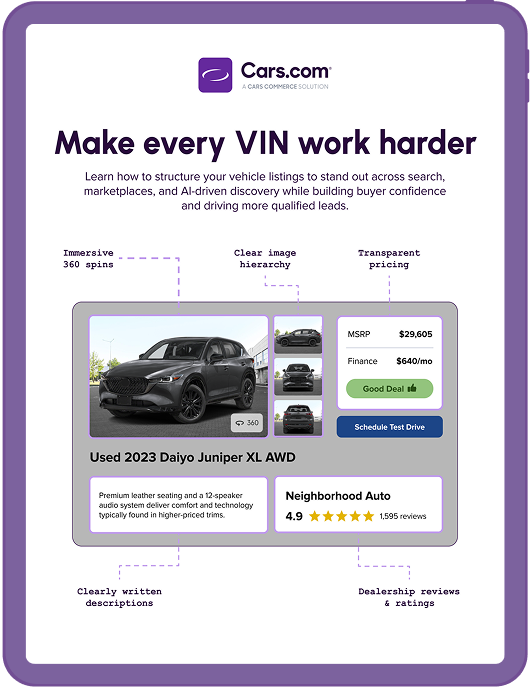
Get our free Digital Merchandising Guide
See how to present every vehicle with the clarity, transparency, and context today’s shoppers expect across every channel.
Mistake #3 Leaving shoppers to guess whether your price is fair
Most shoppers enter the buying process without a clear baseline for what a fair price looks like. They’ve heard stories about hidden fees and quotes that don’t match what was online. In fact, nearly 40% say the price they saw on the listing didn’t match the quote they received.4 That gap is a compliance issue. The FTC has warned 97 auto dealership groups about deceptive pricing practices, making transparent listings a legal necessity as much as a best practice.
That experience shapes how buyers approach every dealership conversation. When your VDP leaves pricing questions open, shoppers arrive ready to push back. However, transparent listings can change that dynamic.
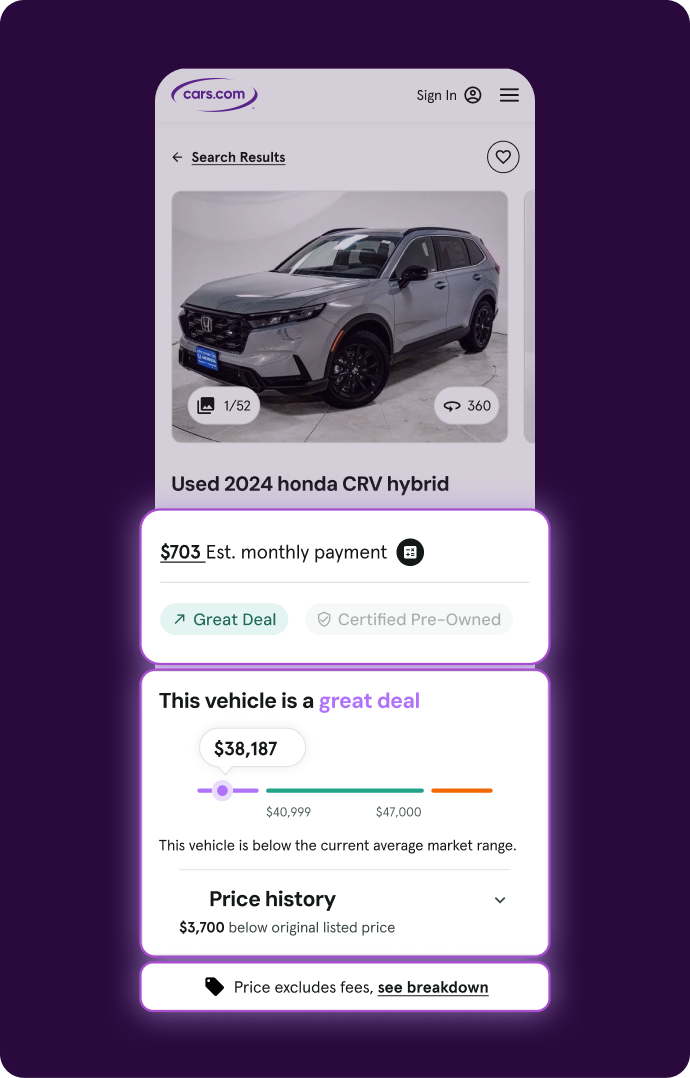
How to fix it
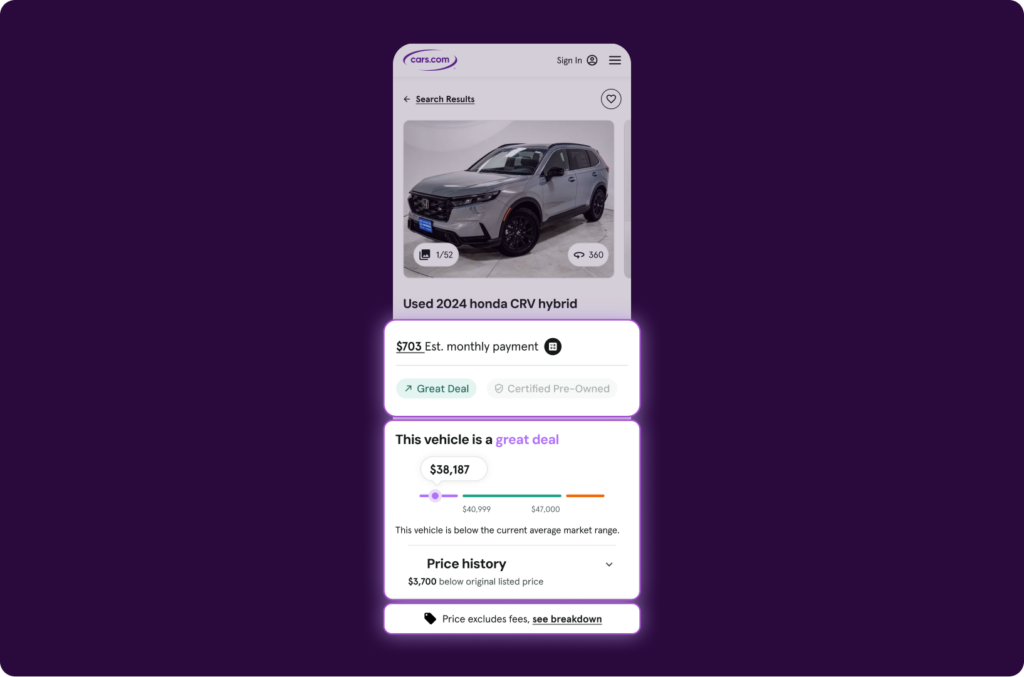
High-performing VDPs clearly explain how buyers should evaluate a vehicle’s cost.
Your listing should include:
- The actual all-in price for the vehicle (inclusive of doc and recon fees)
- Estimated monthly payments for budget-focused shoppers
- Upfront disclosure of documentation and additional fees
- Vehicle history reports, or a callout in seller notes that one is available on request
- Market comparison indicators
- Payment calculators and financing tools
When shoppers can see how your price compares to similar vehicles, they’re more likely to trust it. Cars.com’s price stacking feature makes it easy to surface itemized fees directly on your VDP — so shoppers see the full picture before they ever reach out.
Takeaway: Price transparency reduces skepticism and keeps negotiations focused on the vehicle rather than the listing.
Mistake #4 Not putting your reviews where shoppers can see it
90% of shoppers haven’t chosen a dealership when they start their search. When inventory and pricing look similar across multiple listings, reputation often becomes what tips the decision.
Yet many dealers treat reviews as a passive byproduct of doing business rather than as one of their most powerful conversion tools.
Common reputation gaps:
- Ratings buried at the bottom of the page
- Low review counts or outdated feedback
- No visibility into salesperson performance
For out-of-market buyers especially, reputation bridges the trust gap before they ever commit to reaching out.

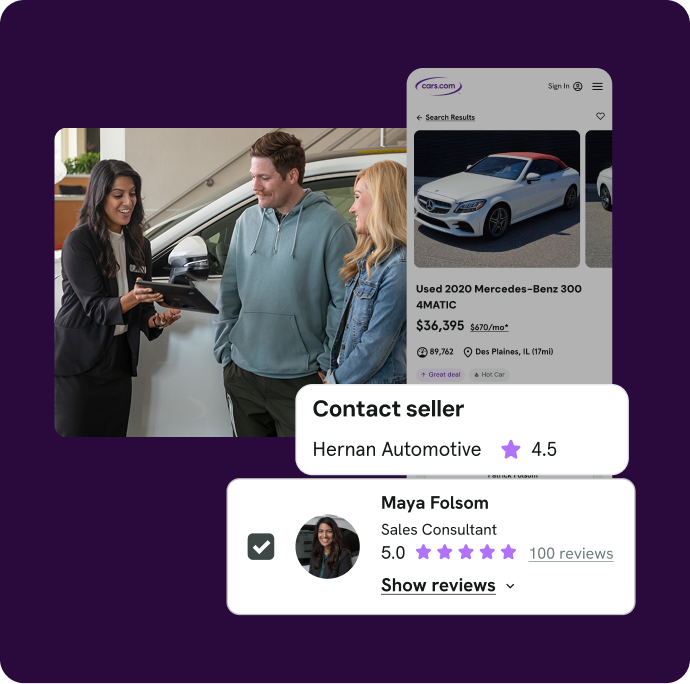
How to fix it
Dealership reputation should be visible wherever shoppers are evaluating vehicles.
Effective VDP reputation signals include:
- Prominent star ratings on VDP pages
- Visible review counts and recent feedback
- Salesperson profiles that humanize the experience
Takeaway: Your reputation is a sales tool. Make it visible wherever shoppers form opinions: on your VDPs, marketplace listings, and anywhere else they find you.
Mistake #5 Building VDPs that get in the way of their own conversion
With 61% of car shoppers beginning their journey on a marketplace, the VDP is often the first and only impression your dealership makes. Your VDP must present your brand, build trust, and make the next step obvious.
Every VDP tries to convert shoppers, but not all succeed. The difference comes down to a few key factors.
Information hierarchy
Price, key features, and your dealership identity should be immediately visible, and not buried below the fold. Shoppers who have to search for what they need tend to leave.
CTA language
Phrases that tell a shopper what happens next and reduce hesitation at the moment it matters most:
- “Get today’s price”
- “Schedule a test drive”
- “Check availability”
Multiple pathways
Every dealership has a primary conversion goal — a phone call, a form fill, starting a chat, or digital retailing engagement. Your VDP should make that action obvious, with supporting options that don’t compete for attention.
Too many CTAs is a more common drop-off trigger than too few. Common engagement options include:
- Click-to-call
- Live chat
- Payment calculators
- Trade-in tools
- Contact forms
Dealership presence
Strong branding and a visible team signal to a shopper that they are evaluating a dealership, not just scrolling through a listing. For someone who’s never heard of you, that distinction matters in the seconds they spend deciding whether to reach out.
Takeaway: A VDP that informs without converting is a missed opportunity at the exact moment a shopper is most ready to act.
Quick VDP self-assessment for dealerships
If most of your inventory listings have:
- Fewer than 15 photos
- Generic or auto-generated descriptions
- No payment estimates
- Hidden or missing reviews
Then your merchandising may be costing you leads and margin.
Take the full VDP assessment to see where your listings stand.
Strong merchandising protects margin before
negotiation begins
Margin pressure rarely starts at the negotiation table.
It begins earlier with every shopper who arrives with doubts that a better listing could have resolved.
Negotiations get harder when:
- Photos hide important details
- Descriptions fail to justify the price
- Pricing lacks transparency
- Reputation is invisible
When VDP merchandising builds confidence, both the shopper and the deal benefit.
The inventory is already on the lot. The question is whether your listings are working hard enough to protect what it’s worth.
1 Marketplace-First Consumer Behavior: From Retail to Automotive, Clarivoy, June 2025
2Cars Commerce Consumer Metrics Study, Q2 2025
3Cars.com AI Consumer Study, Q3 2025
4Cars Commerce Dealership Websites Study, Q1 2026
5Cars Commerce Consumer Study, Q3 2025
6Dealer Inspire CTA Effectiveness Study, Q4 2025

)