STRATEGY GUIDE
The dealer’s website playbook
Chapter 5: Create dealership loyalty through your service
Your service drive is a consistent opportunity to strengthen relationships and drive profitability beyond the initial sale. Every scheduled oil change or brake inspection creates a moment to deepen loyalty, reconnect with customers who may have drifted, or identify your next trade-in opportunity.
According to J.D. Power’s 2025 Customer Service Index Study, dealerships that deliver excellent service experiences see significantly higher customer loyalty and intent to return1. Your service department actively feeds your sales pipeline when you leverage it strategically. That’s why a sound digital strategy for your service department should be an essential part of your playbook.
This chapter will help you:
- Build trust and convenience into your service pages that convert browsers into appointments
- Streamline the service-to-sales pipeline to capture trade-ins from your service lane
- Keep customers engaged with dynamic offers, loyalty programs, and personalized experiences
Build your fixed ops foundation
By building a digital foundation that highlights transparency, convenience, and credibility, you can turn service pages into high-performing conversion engines that protect fixed ops revenue and strengthen customer loyalty.
Service page essentials
Your sales pages are designed to convert. Your service pages should work just as hard. The difference is what customers need to see before they take action. While vehicle shoppers want inventory, pricing, and financing options, service customers are asking three fundamental questions: Can I trust you? Is this convenient? Will this cost more than another shop?
Your service page needs to answer the three questions every customer asks before scheduling:

Can I trust you?
Is this convenient?
Will this cost more than another shop?
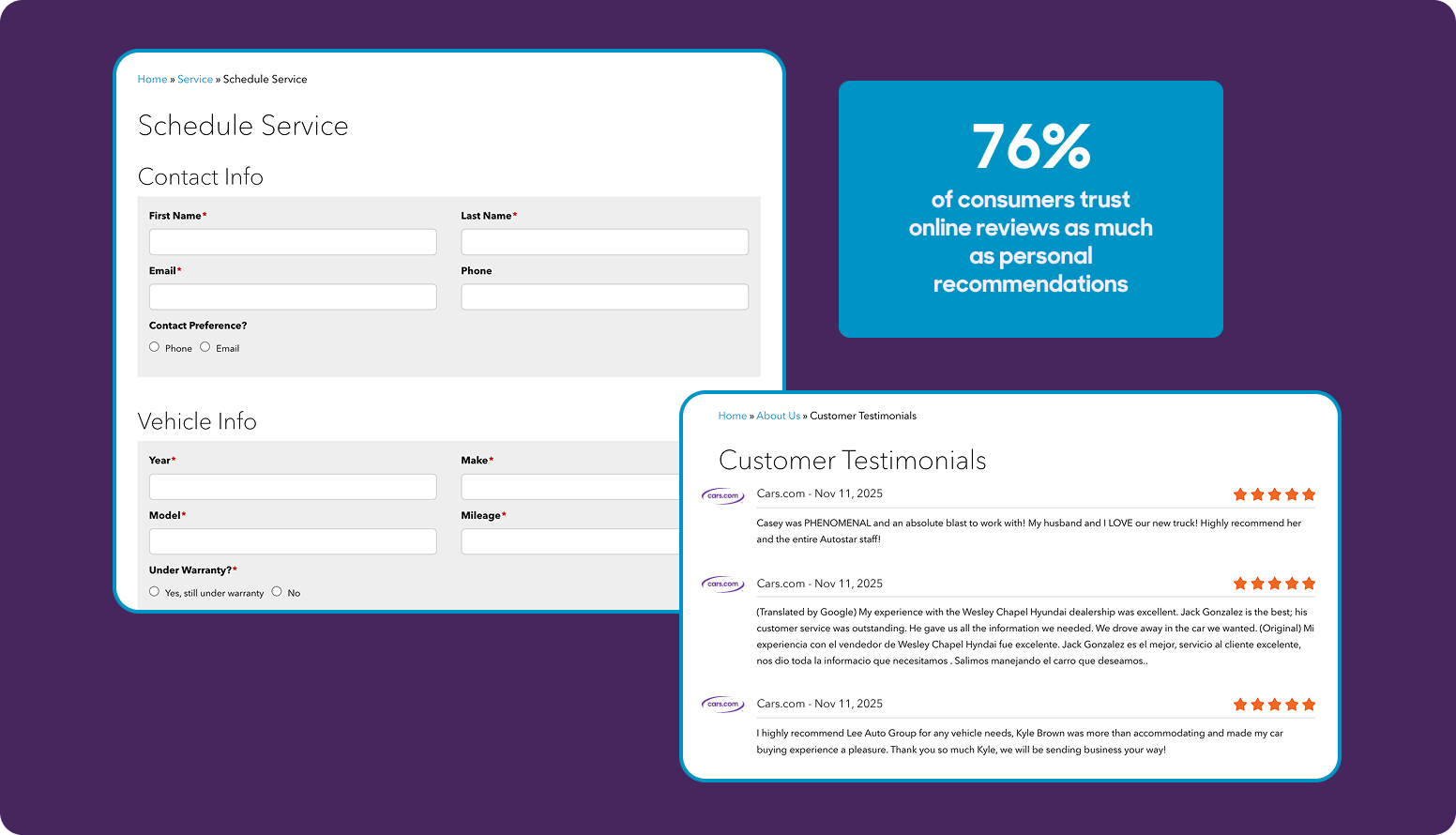
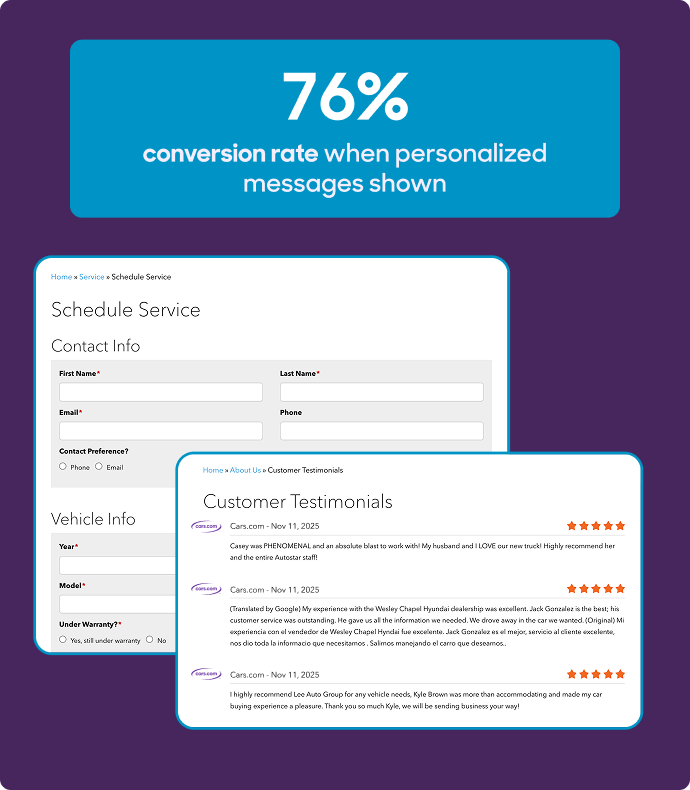
- Can I trust you? Embed social proof where it matters most, next to your appointment scheduler. Star ratings and recent reviews can tip an undecided customer toward clicking “Book Now” instead of calling three other dealerships for quotes. According to BrightLocal’s consumer review survey, 76% of consumers trust online reviews as much as personal recommendations2. Place testimonials strategically, not buried at the bottom of the page, but integrated into the scheduling page where they’ll actually influence decision-making.
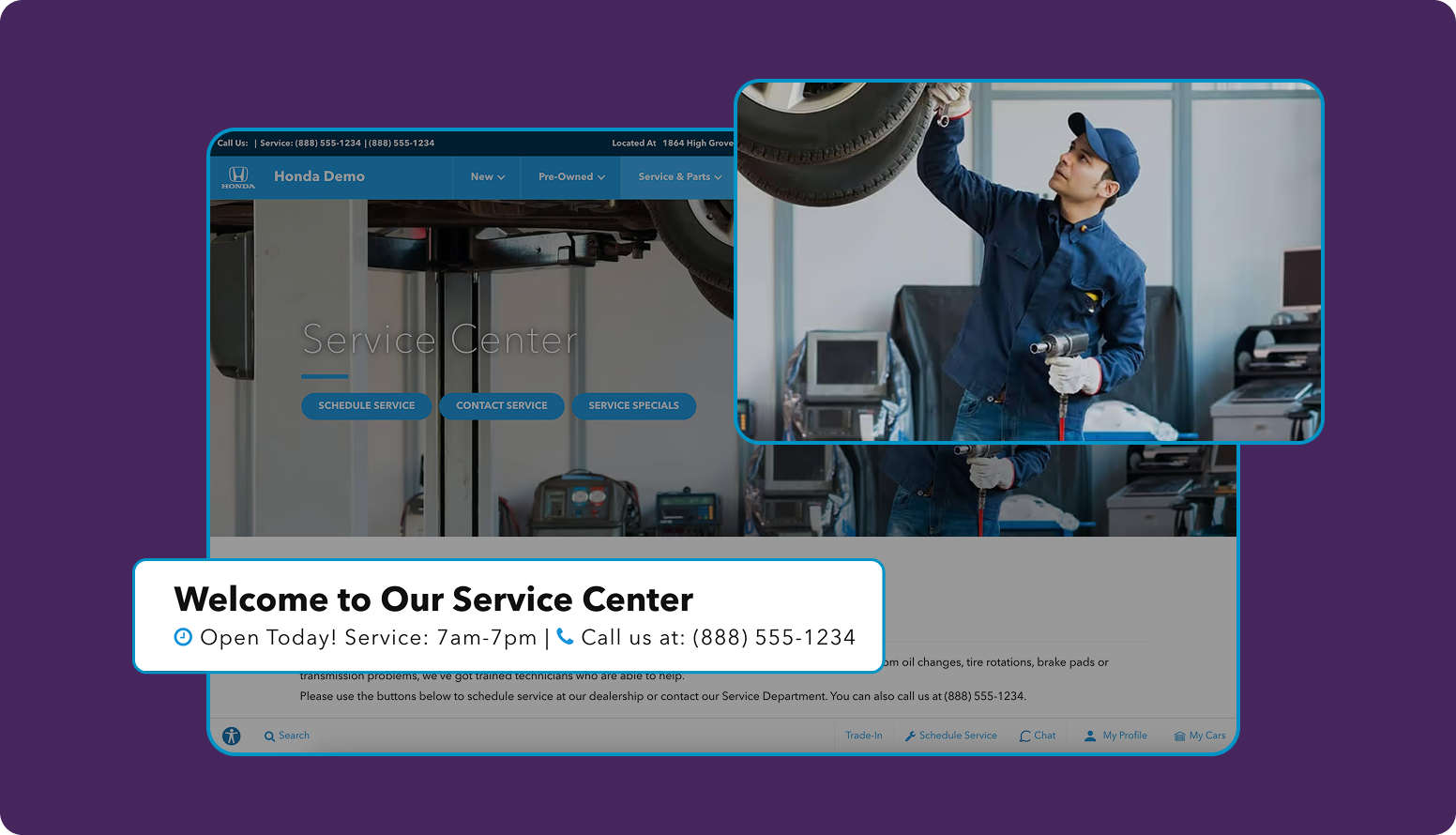
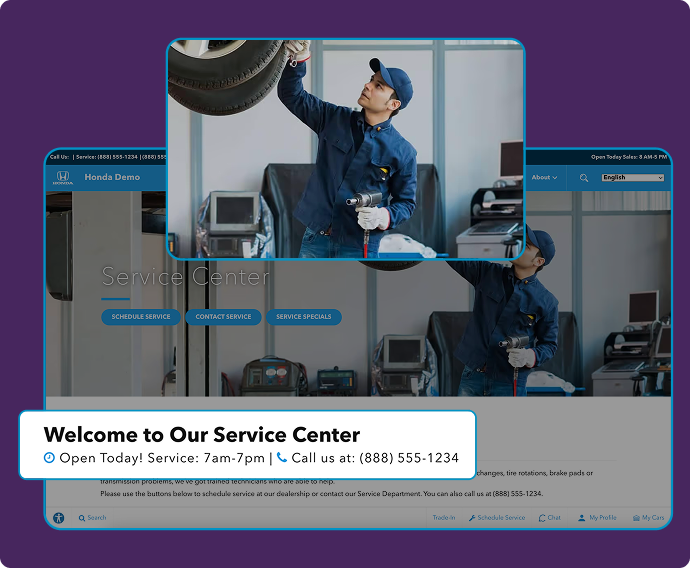
- Is this convenient? Start with operational transparency. Clear hours, direct contact info, and facility details build confidence. According to J.D. Power’s 2024 Customer Service Index Study, 55% of customers choose service providers based on convenience of location3, making it critical that customers can quickly confirm when and where you’re available.
- Will this cost more than another shop? Layer in authority signals that justify your pricing over independent shops or other dealerships. Display OEM certifications, factory-trained credentials, and warranty coverage prominently. These aren’t just badges, they’re your defense against the “I can get this done cheaper down the street” objection. Factory-certified technicians and genuine OEM parts become selling points when positioned correctly, especially for customers still within their warranty period who may not realize that using an independent shop could void their coverage.

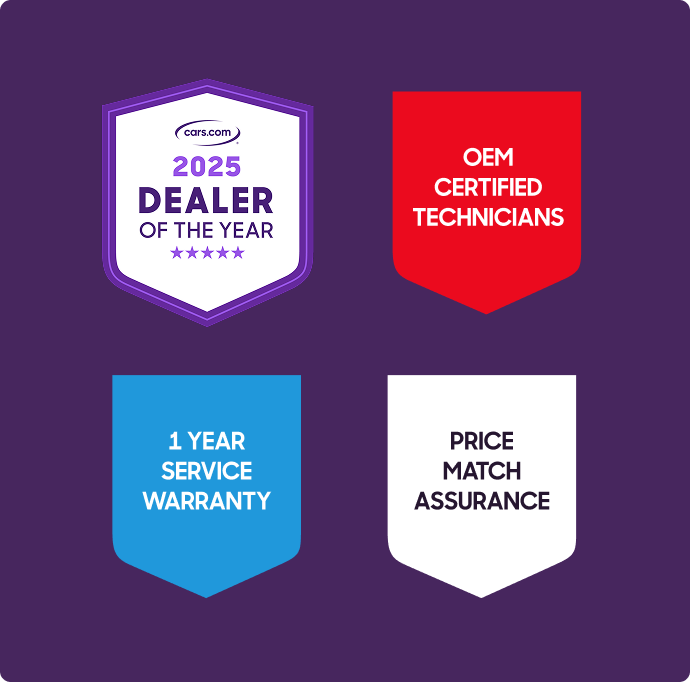
Foundation checklist for your service page:

Operational transparency: Clear hours, direct contact info, and facility details
Authority signals: OEM certifications, factory-trained credentials, and warranty coverage
Visual credibility: Professional photos of service bays, waiting areas, and technicians
Service specials showcase: Most attractive offers visible at a glance with links to full details
Make service easy to schedule
Here’s a common mistake: dealers put a hero image and prominent CTA for “Shop Inventory” on their homepage, then bury the service scheduler three clicks deep. Elevate service in your site structure by putting a service CTA in the hero section of your homepage, and/or add a sticky button on mobile that says “Need Service? Schedule Now.” Make it just as easy for service customers to convert as it is for new-car shoppers. This isn’t just good UX, it’s a statement about how your dealership values the customer relationship beyond the initial sale.
Treat your service page as a one-stop shop where customers don’t have to hunt across multiple pages to find what they need. Whether they’re looking for your hours, want to understand your service specials, or are ready to start the trade-in process, reducing friction between intent and action is what elevates high-performing service pages that generate appointments.
Reinforce your service promotions & loyalty strategies
A strong digital foundation is only half the equation. To keep your service department top of mind and drive repeat business, you need to actively promote it through dynamic offers and structured loyalty programs. One-time discounts might fill service bays temporarily, but loyalty programs build habits, creating customers who return again and again instead of going to independent shops or other dealerships.
Fresh promotions that drive action
Static “10% off oil changes” coupons on your website year-round don’t build loyalty, they train customers to expect discounts and devalue your service. Dynamic, relevant offers that rotate regularly and align with customer needs are what actually drive traffic and revenue.
We’d recommend maintaining 3-4 live offers on your site at any given time and refreshing them monthly to create urgency and relevance. Keeping your website updated with timely seasonal services, like battery checks in November or A/C service in May, ensures customers find relevant solutions when they’re actively searching for them. These services solve problems customers are already experiencing or about to experience, which makes them more likely to schedule with you.
It’s important to create urgency with expiration dates, but make them realistic. “Expires in 24 hours” on a service offer can feel gimmicky and train customers to ignore your promotions. “Valid through the end of the month” gives customers time to plan while still motivating them to act before the opportunity disappears.
Service special checklist:
Rotating strategy: Maintain 3–4 live offers and update monthly.
Seasonal alignment: Push battery checks in winter, A/C service in summer.
Targeted incentives: Run discounts for high-margin jobs like brakes or tires.
Urgency creation: Use expiration dates to inspire quick action.
Showcase your loyalty program
Your service lane is where loyalty sticks, but only if customers know about your program and can easily track their progress. A loyalty program that lives only at the service drive doesn’t create the same engagement as one that’s visible and actionable on your website.
- Make program details easy to find. Create a dedicated loyalty program page that explains how customers earn and redeem rewards.
- Promote enrollment at key conversion points. Add loyalty program callouts on your service landing pages and service confirmation pages.
- Use email and SMS to drive engagement. Send reminders when customers are eligible for a reward or when you haven’t seen them in a while. These messages should link directly to your service scheduler so customers can book their next appointment in just a few taps.
Advanced personalization & retention tactics
No two service customers are alike, so why give them all the same experience? With personalization, you can tailor service content to individual behaviors, vehicles, and even local conditions. This proves to customers that you understand their needs before they even pick up the phone or submit a service request.
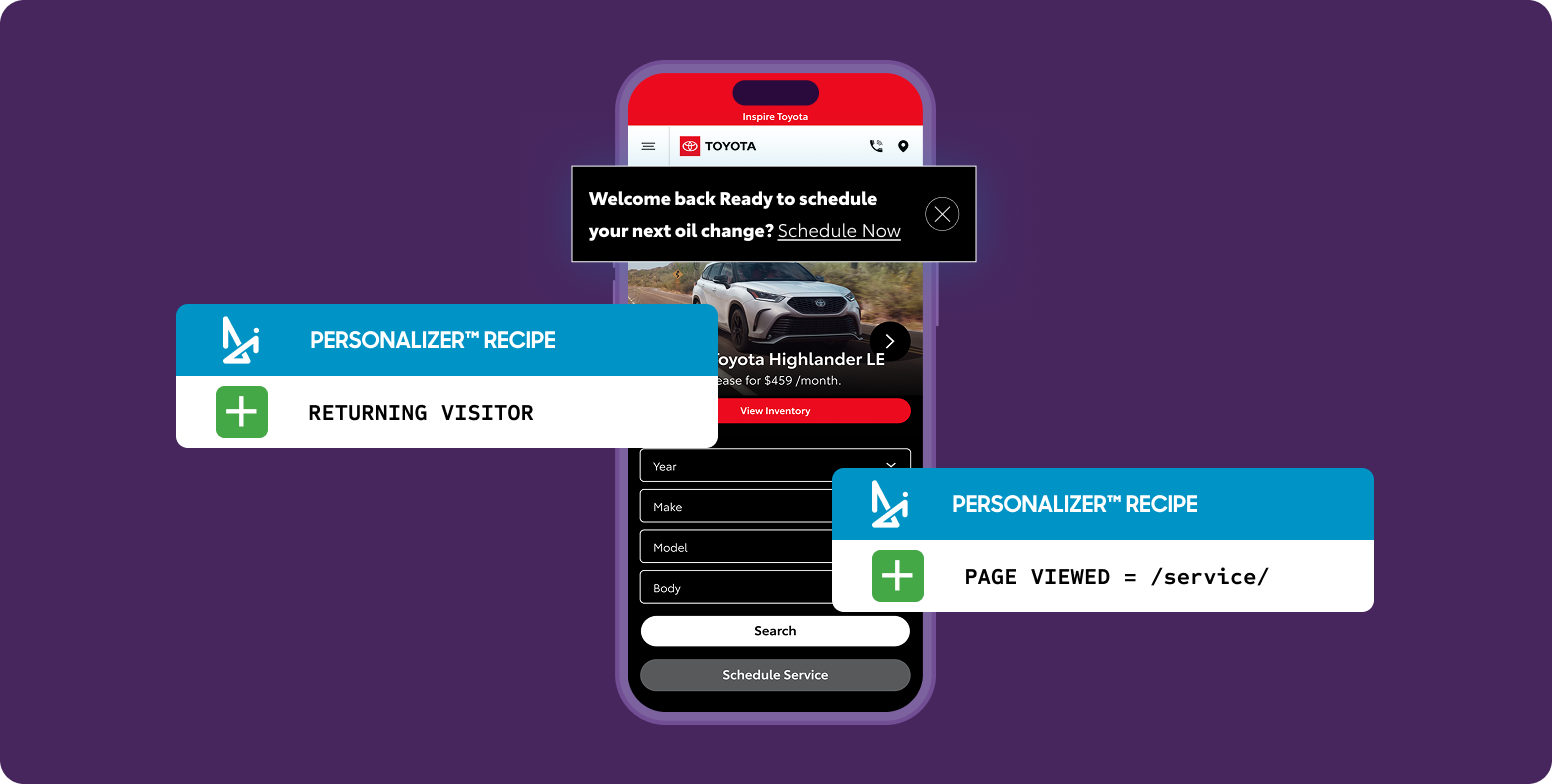
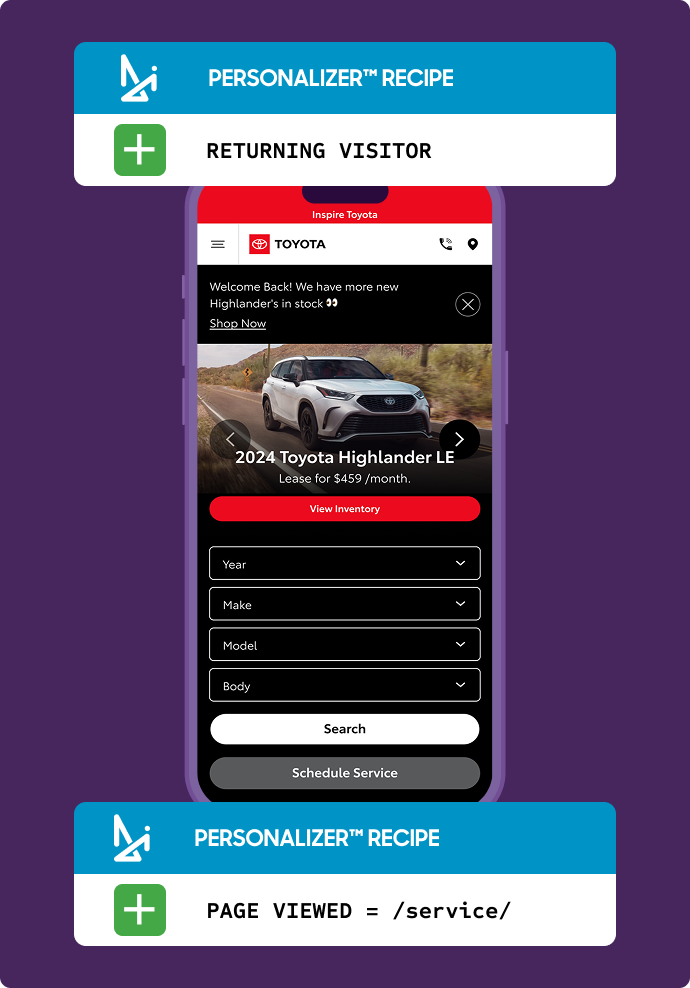
- Behavior-triggered personalization uses customer actions (or inactions) to deliver relevant messaging at exactly the right moment. When a return visitor lands on your site, greet them with “Welcome back! Ready to schedule your next oil change?” instead of generic homepage content. If someone viewed your service page, retarget them with “Book your brake inspection today! 10% off this month.” Personalization can be the difference between messages feeling like annoying ads and helpful reminders
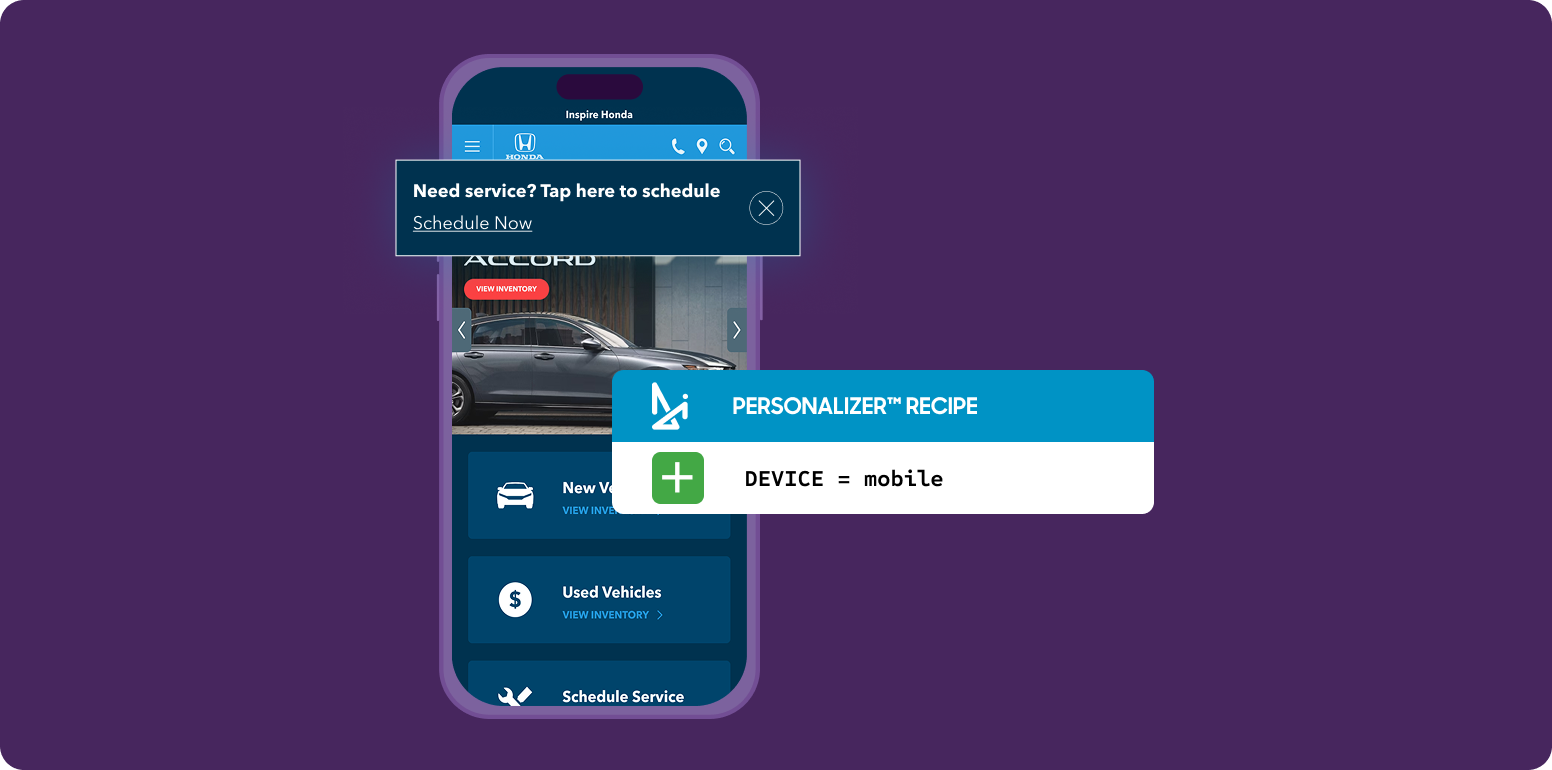
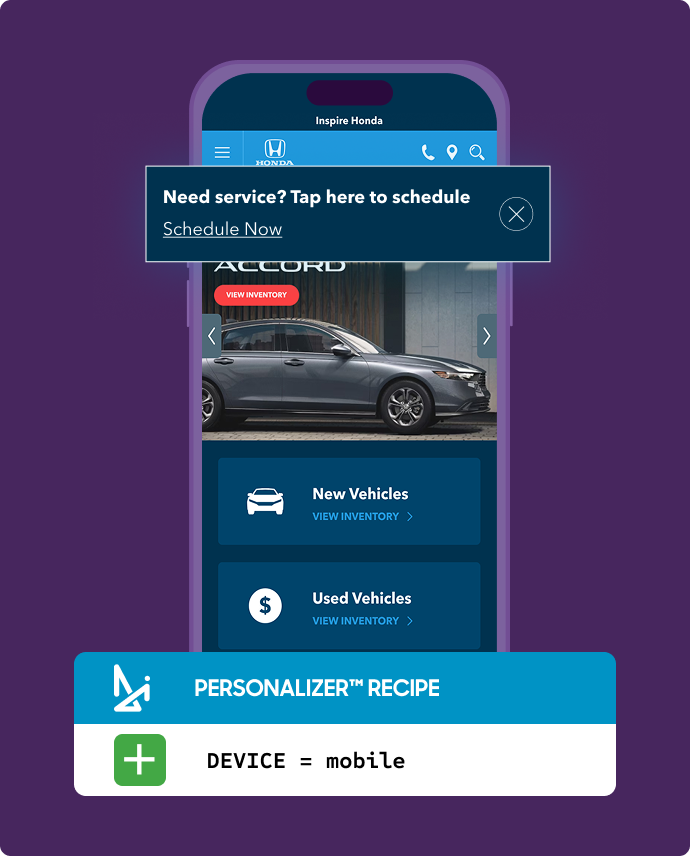
- For mobile users implement one-click scheduling banners that recognize the device and streamline the booking process. Mobile service customers are often in “I need this done now” mode, so reducing friction with options like “Book service in seconds from your phone” or “Tap to call and schedule” meets the urgency of the moment.
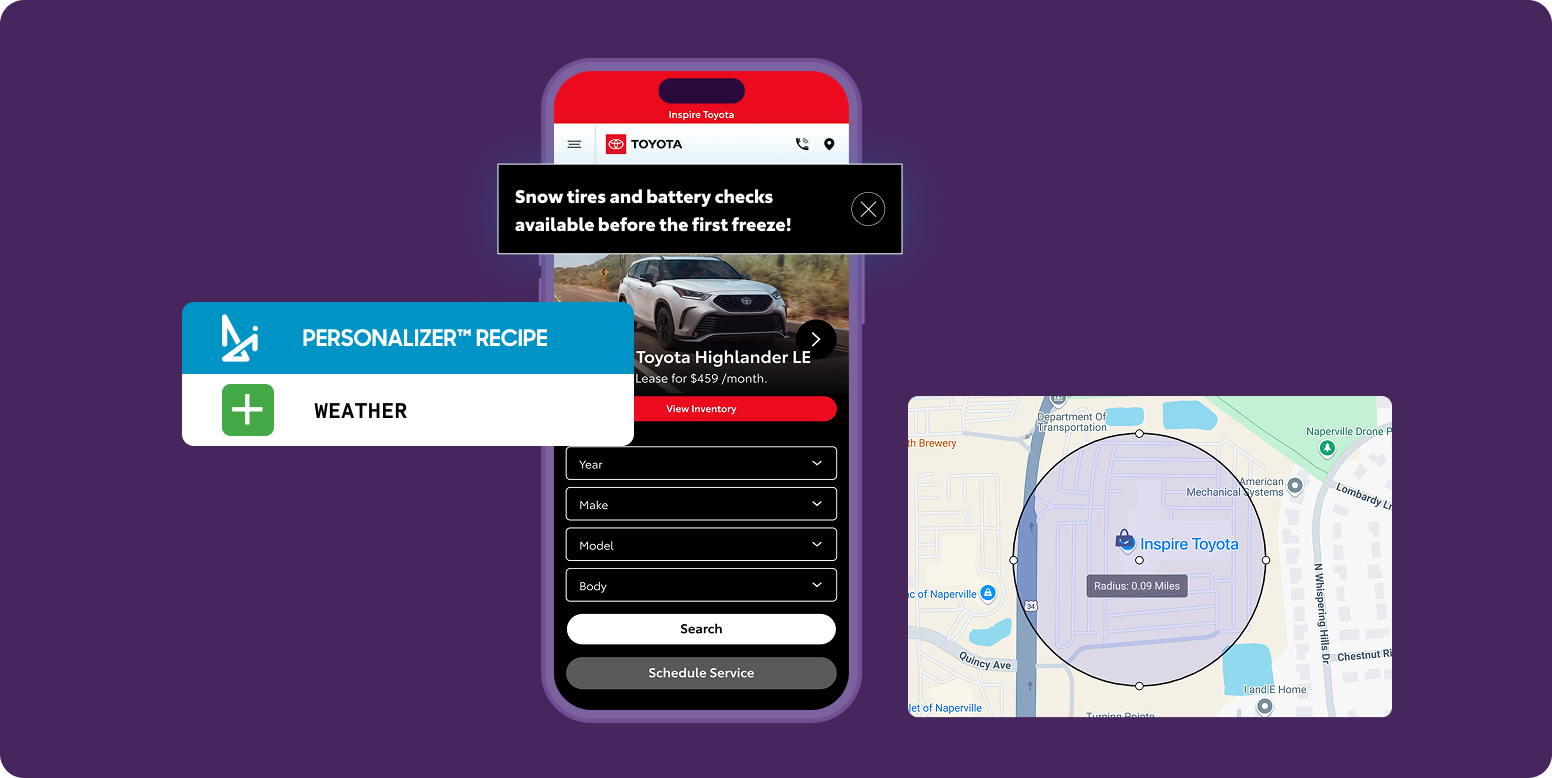
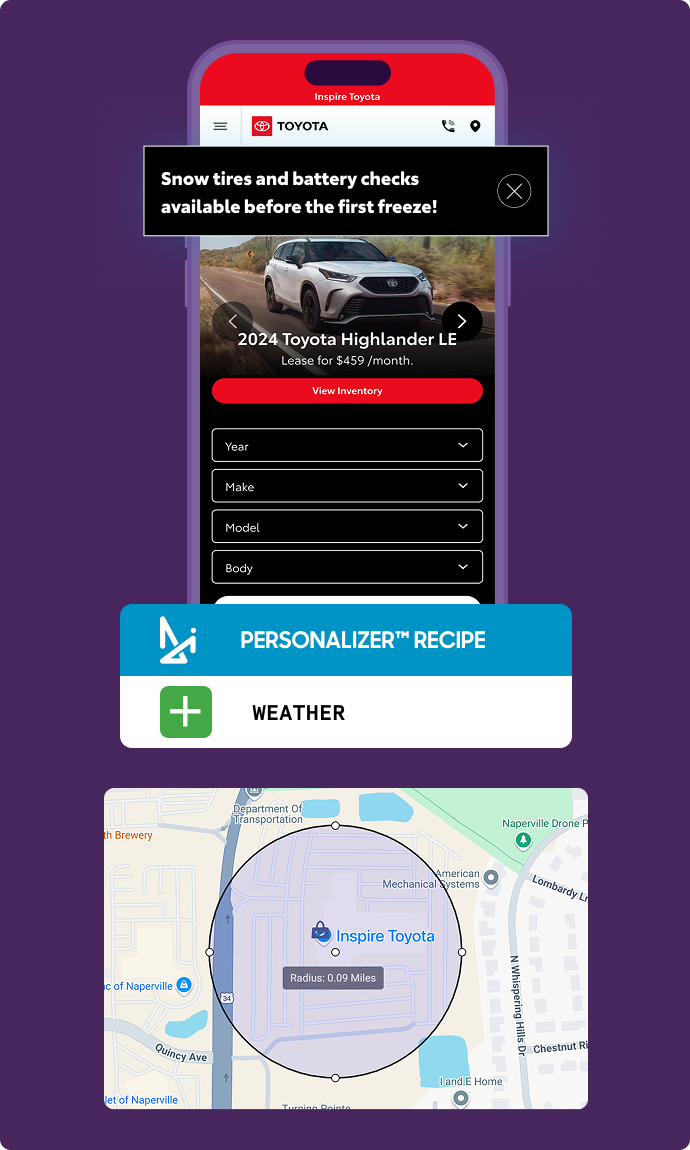
- Geolocation and weather-based personalization. When temperatures drop in your market, automatically surface winter preparation services: “Snow tires and battery checks available before the first freeze.” If a customer lives in a region that just experienced a major storm, promote services like windshield repair, undercarriage rust prevention, or paint touch-ups. This level of relevance makes your marketing feel helpful rather than salesy.
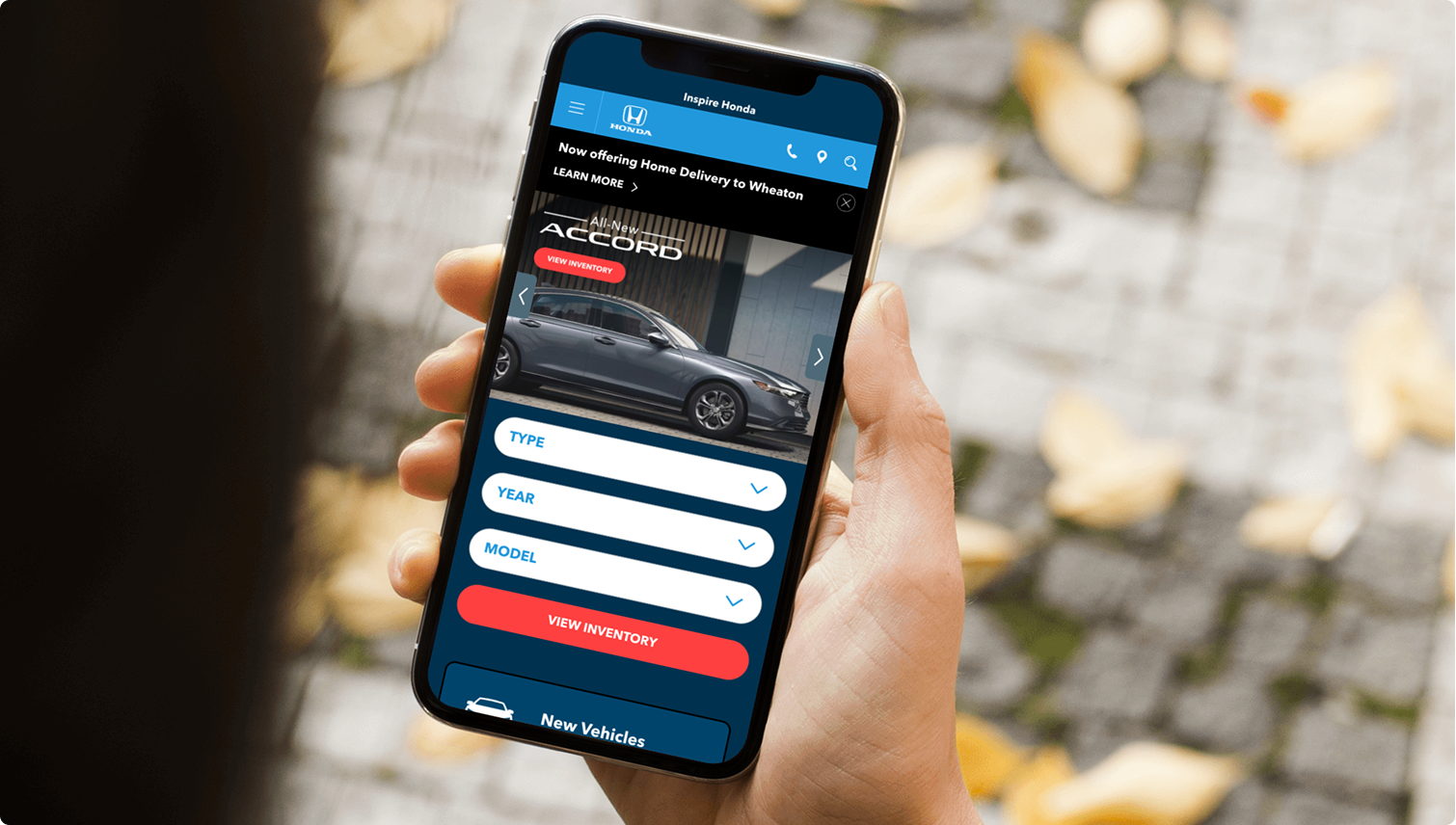
The goal of all these personalization tactics is to create a service experience that feels tailored to each customer’s specific situation. When done well, personalization doesn’t feel invasive, it feels like your dealership genuinely understands what customers need and when they need it.
Turning service visits into acquisition opportunities
By connecting service to trade-in workflows, you create a pipeline that captures customers at exactly the right moment – when they’re already thinking about whether their current vehicle is worth maintaining or worth upgrading.
Consider the mindset of a customer who just received a $2,200 repair estimate for their aging vehicle. That’s not just a service transaction, it’s a pivotal moment where they’re actively calculating whether to invest in their current car or start shopping for a replacement.

Spark the trade-in inspiration
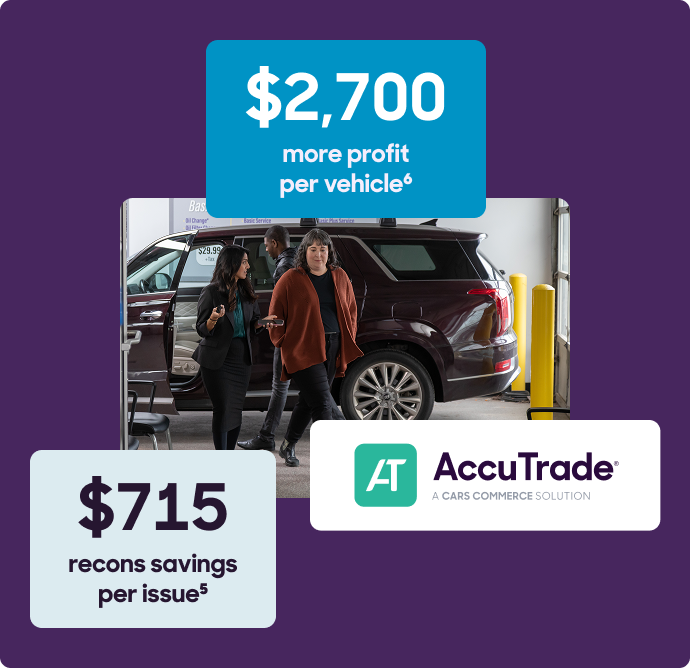
Make sure your shoppers have an easy way to start the trade-in process, right from your service pages. AccuTrade is a perfect way to ask simple, non-intrusive questions like “Thinking about an upgrade?” or “Curious what your vehicle is worth?” planted at strategic moments to initiate the trade-in conversation before customers even arrive at your dealership.
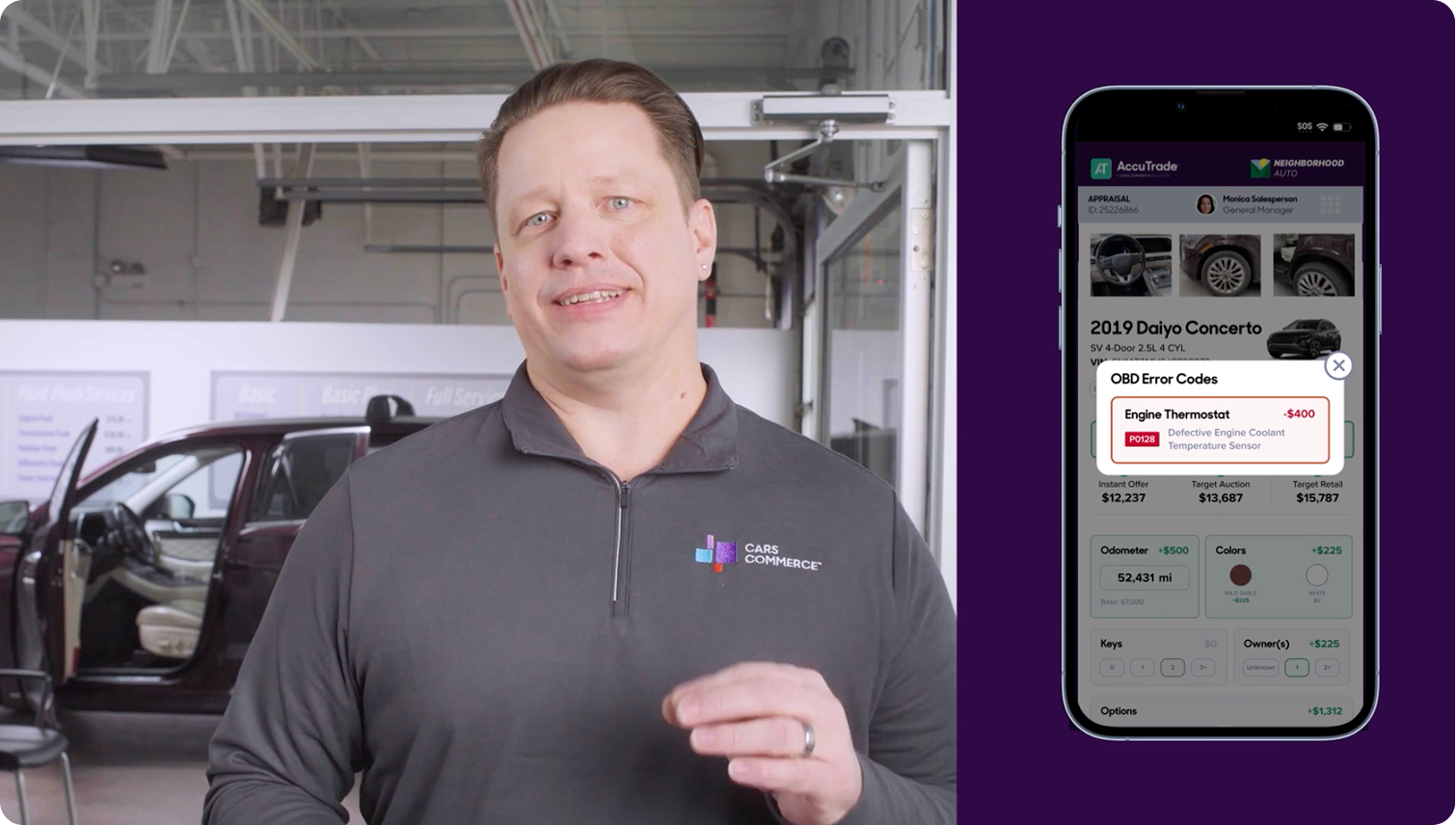
Be sure to also add your trade-in tools into your appointment confirmation workflow. After someone books a service appointment online, your confirmation email and thank you page are opportunities to add in a soft trade-in offer: “While you’re here for service, get a free appraisal in minutes.” This positions the dealership as customer-focused (saving them time) while creating an additional touchpoint for your sales team.You could also implement automated follow-up sequences triggered by specific service visits. A customer who just spent $1,800 on transmission work is a qualified sales/trade lead. Not immediately, but within 30 to 90 days when the sting of the repair bill has faded but the anxiety about future repairs remains fresh. Use your CRM to automatically send trade-in offers after high-mileage repairs, major service milestones, or warranty expirations. These triggers could be predictive indicators of purchase intent.
SUCCESS STORY
The power of a strong trade-in strategy
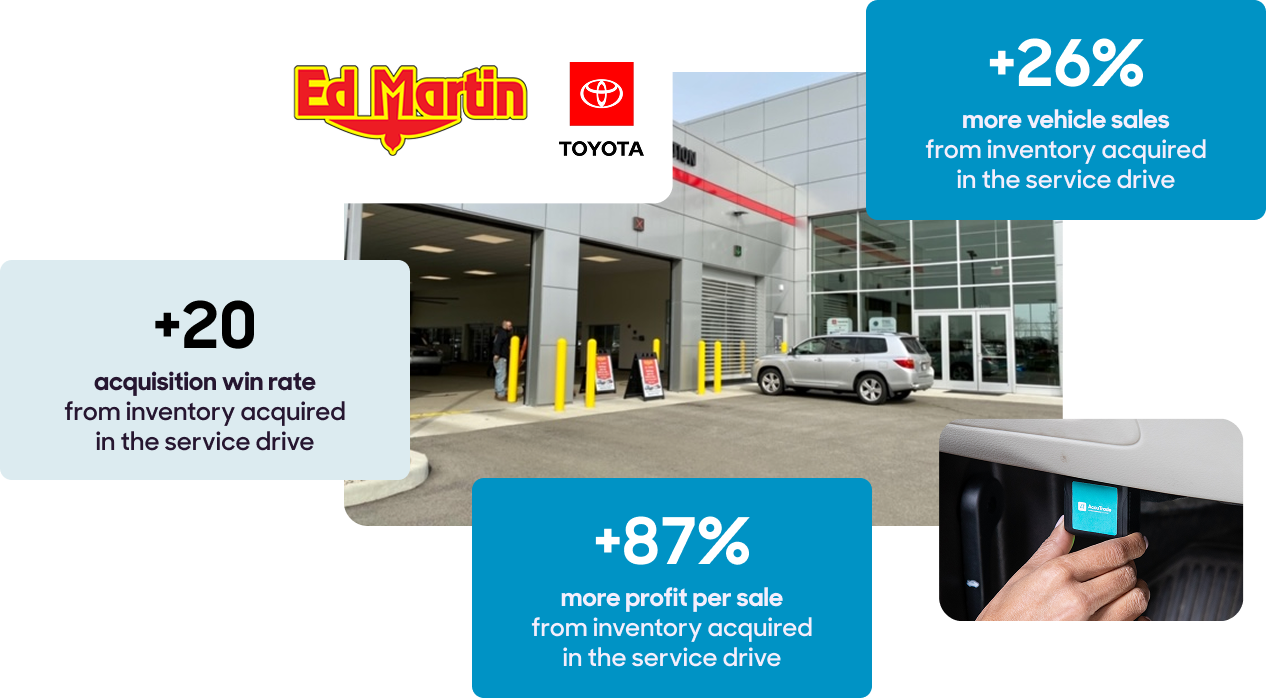
Ed Martin Toyota integrated AccuTrade into their service drive and saw a remarkable 87% increase in profit per VIN acquired6. They aren’t outliers, they’re proof that connecting your service operation to your sales pipeline generates measurable ROI when executed with the right digital tools.
SUCCESS STORY
The power of a strong trade-in strategy
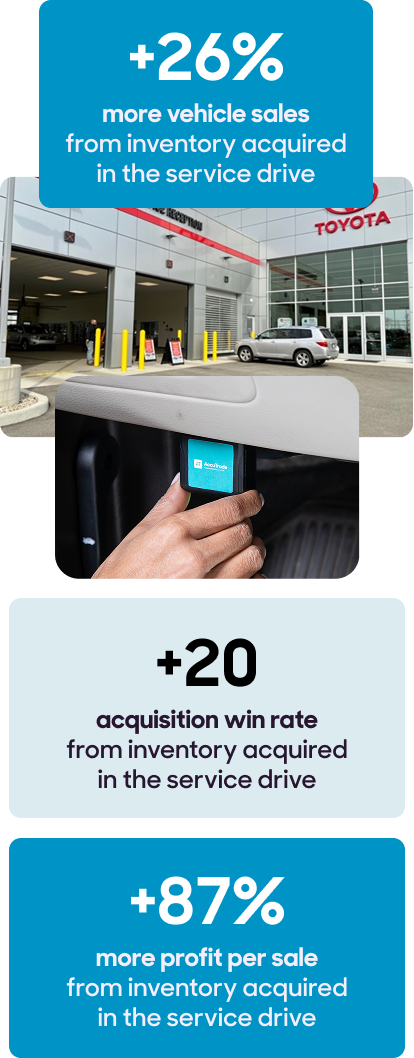
Ed Martin Toyota integrated AccuTrade into their service drive and saw a remarkable 87% increase in profit per VIN acquired6. They aren’t outliers, they’re proof that connecting your service operation to your sales pipeline generates measurable ROI when executed with the right digital tools.
Keep in mind that these aren’t sales tactics — they’re helpful resources that meet customers where they already are in their decision-making process.
What’s next: Chapter 6 – Reporting for Success
You’ve transformed your service department into a retention and acquisition engine, protecting fixed ops revenue, keeping customers loyal, and capturing profitable trades from the service lane. In the next chapter, we’ll explore how to leverage data insights across your entire digital strategy, ensuring every customer touchpoint is continuously optimized to drive measurable business results. You’ll learn how to implement:
- Core KPIs that matter for automotive retail
- Essential reporting tools: Prizm, GA4, and more
- Fast fixes checklist for immediate implementation
- Team alignment strategies using shared data
📄 Get the Quick Reference Guide
Download the condensed PDF version of Chapter 5 — packed with the biggest stats, key takeaways, and actionable tactics. Perfect for a quick study before your next strategy meeting.
Download the Quick GuideNot with Dealer Inspire?
See how our websites turn shopper intent into action with data-backed UX design, transparent pricing experiences, and conversion paths built to reduce friction and build trust at every click.
1 J.D. Power. “2025 U.S. Customer Service Index (CSI) Study.” J.D. Power Press Release, 2025. https://www.jdpower.com/business/press-releases/2025-us-customer-service-index-csi-study
2 BrightLocal. “Local Consumer Review Survey 2023.” BrightLocal Research, 2023. https://www.brightlocal.com/research/local-consumer-review-survey-2023/
3 J.D. Power. “2024 U.S. Customer Service Index (CSI) Study.” J.D. Power Press Release, March 2024. https://www.jdpower.com/business/press-releases/2024-us-customer-service-index-csi-study
4 AccuTrade Dealer Engagement Reporting, 2024
5 Calculated savings from Auction fees, transport, OBD loss avoidance and recon
6 Ed Martin Toyota internal numbers, May – July 2024

)