EXPERT ARTICLE
Transparency is the new sales strategy

The car buying journey is now largely online. This means that trust is established or lost before the shopper ever contacts a dealer. Consumer trust in dealerships has jumped from 44% in 2023 to 69% in 20251, driven largely by dealers embracing digital tools that give shoppers more information up front. That’s real progress. But the experience still presents challenges, and buyers often arrive at the dealership with more questions than answers.
Most shoppers find the car they want before choosing a dealer. The listing itself does the selling, or fails to. For today’s used car shopper, three factors go a long way toward building the confidence they need to reach out: a price they can trust, a vehicle condition they can verify, and a dealer reputation they can vet — all before they ever set foot on the lot.
Before getting into exactly how to inspire confidence that converts on the VDP, it’s helpful to take a closer look at the core challenges shoppers are experiencing.
The stress is real, and it’s about information
While transparency in auto retail is trending in the right direction, it still has room for improvement. Recent survey data reveal that only 3 in 10 shoppers feel they have enough information before visiting a dealership.2 That uncertainty makes the buying process more stressful.
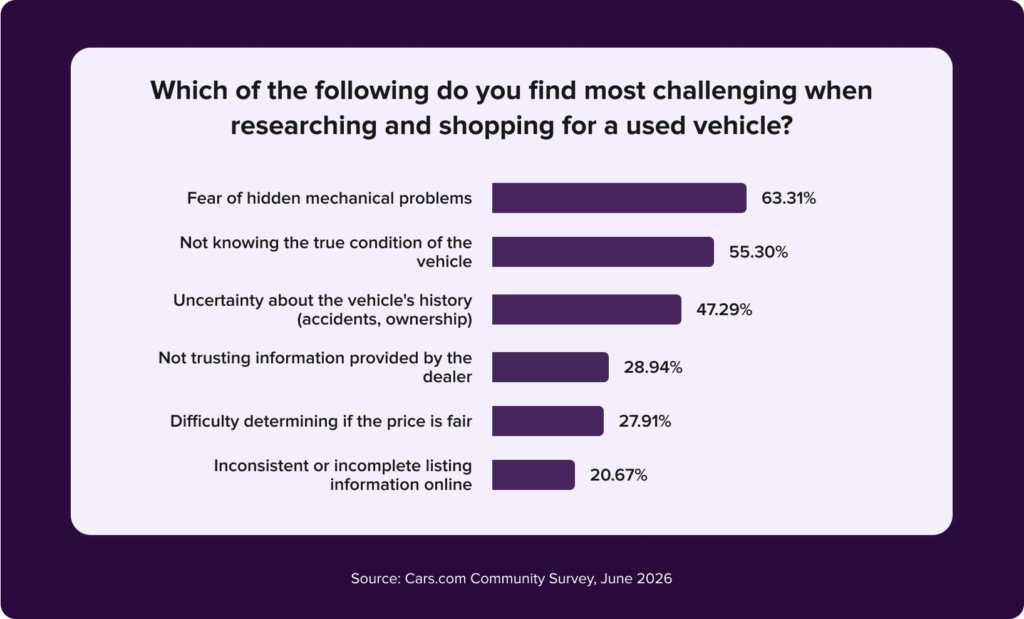
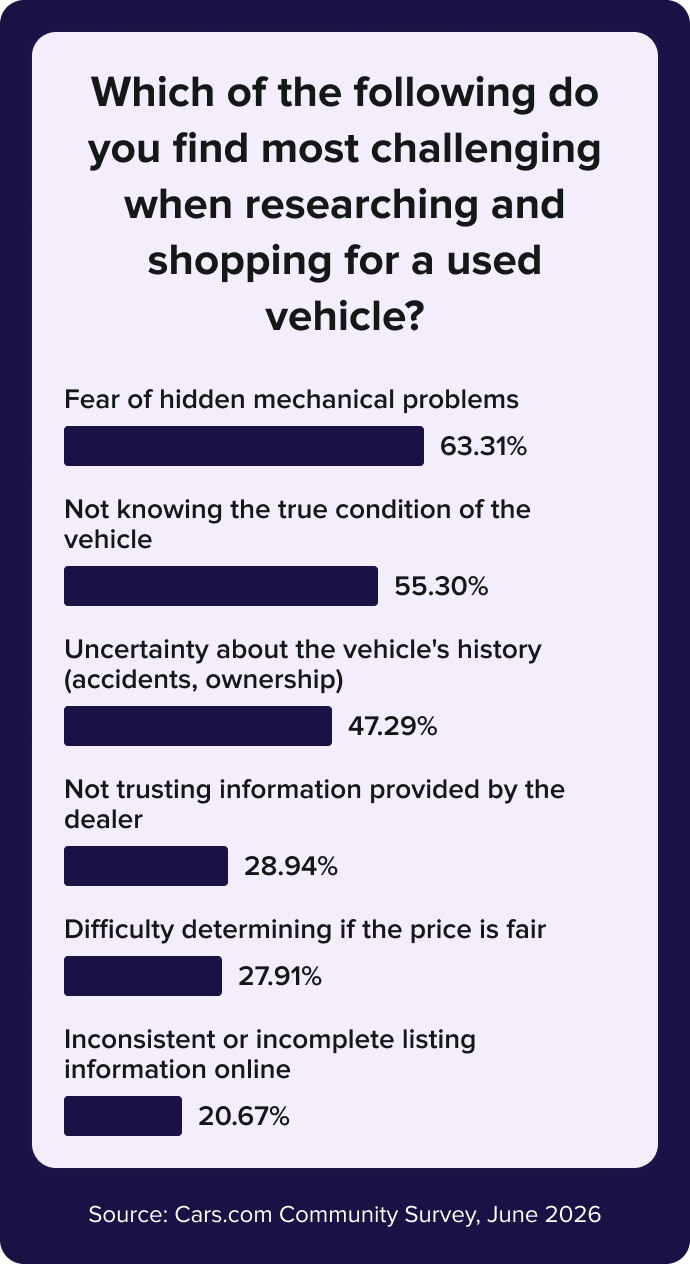
Uncertainty about a vehicle’s condition and history creates the most anxiety for shoppers. Fear of buying a lemon tops the list. The related challenge of not knowing the vehicle’s true condition comes in a close second for potential buyers.
Providing transparent information is a meaningful step toward resolving these anxieties. But information alone isn’t enough. Shoppers also need confidence that what they’re seeing online is accurate and complete. This is the standard that dealers who are pulling away from the competition are holding themselves to.
What dealers think vs. what shoppers experience
Most dealers genuinely believe they’re giving shoppers what they need. The challenge lies in their execution, not in their intent. The information shoppers need to feel confident often exists, but it isn’t always surfaced clearly enough online. That disconnect is where deals are quietly lost before a conversation even starts.
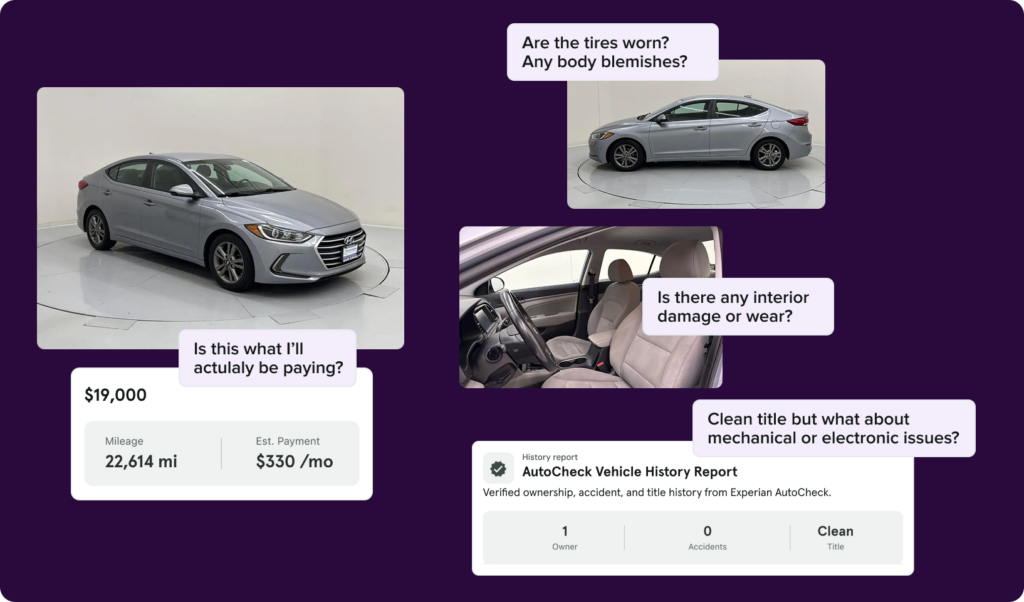
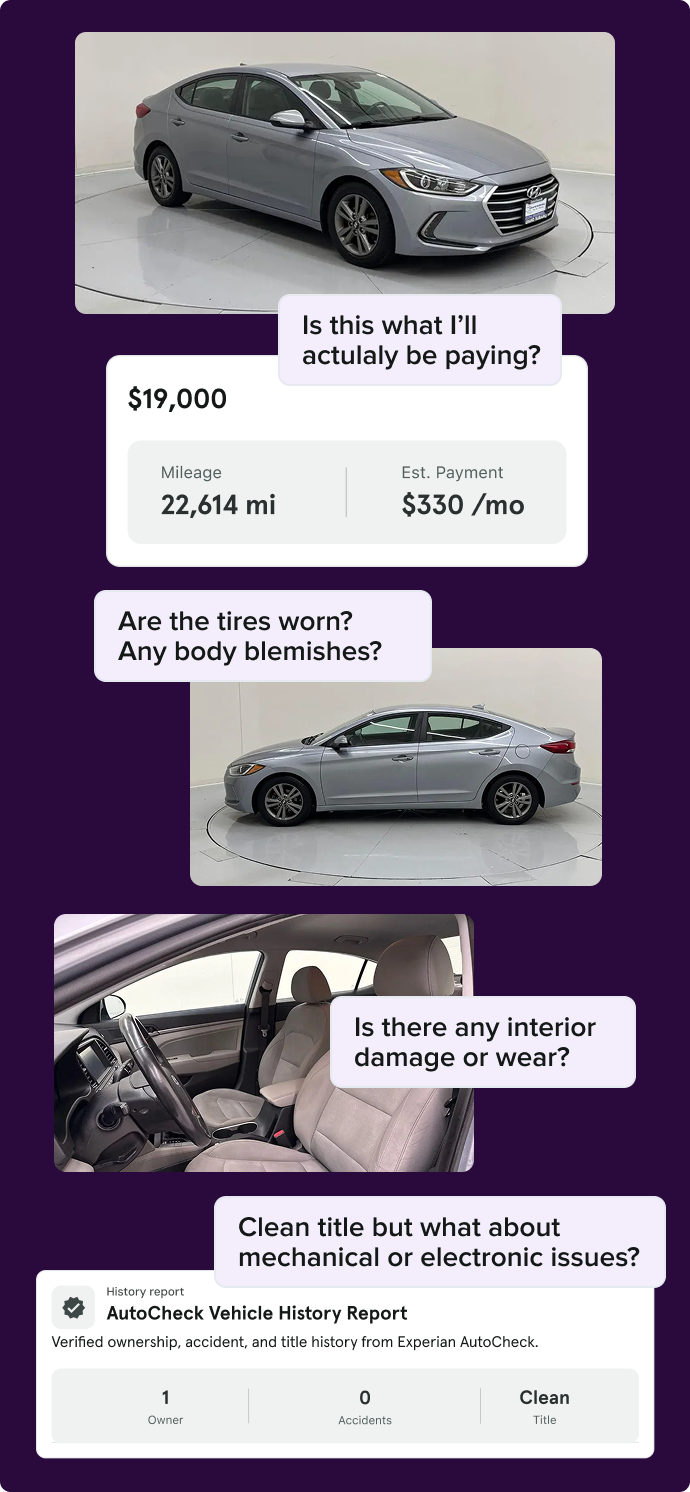
62% of shoppers have visited a dealership and found the vehicle’s condition wasn’t what they expected based on the online listing.2 And the ripple effect goes further. An additional third of shoppers who haven’t had that experience yet arrive at dealerships already wondering if it could happen to them. Not because they distrust a specific dealer, but because the online experience hasn’t given them enough to go on.
This is a significant opportunity. Dealers who close this information gap don’t just prevent a disappointing visit — they transform a natural shopper anxiety into a competitive advantage. Every question answered online before a shopper reaches out is a reason to choose your dealership over the one that left them guessing.
What shoppers actually need to feel confident
Once a shopper finds a vehicle they’re interested in, they’re silently asking three critical questions before they ever reach out to a dealer:
- Can I trust the price?
- Can I trust the vehicle’s condition?
- Can I trust the dealer behind this listing?
Dealers who answer all three — clearly and before the shopper has to ask — remove the friction that slows deals and the doubt that kills them.
Here’s how to answer each question to earn the “yes” before the conversation even starts.
1. Be up front about price, all the way through the deal
The gap between a listed price and an out-the-door cost is one of the most persistent sources of shopper uncertainty in automotive retail — and one of the most preventable. 85% of shoppers say price transparency from the dealer is very or extremely important to feeling confident enough to move forward with a purchase.2 For most shoppers, it’s the minimum requirement to move forward.
This is exactly what Cars.com price stacking is built to solve. It surfaces itemized fees directly on VDP listings, giving shoppers a clear, complete picture of what they’re paying before they reach out.
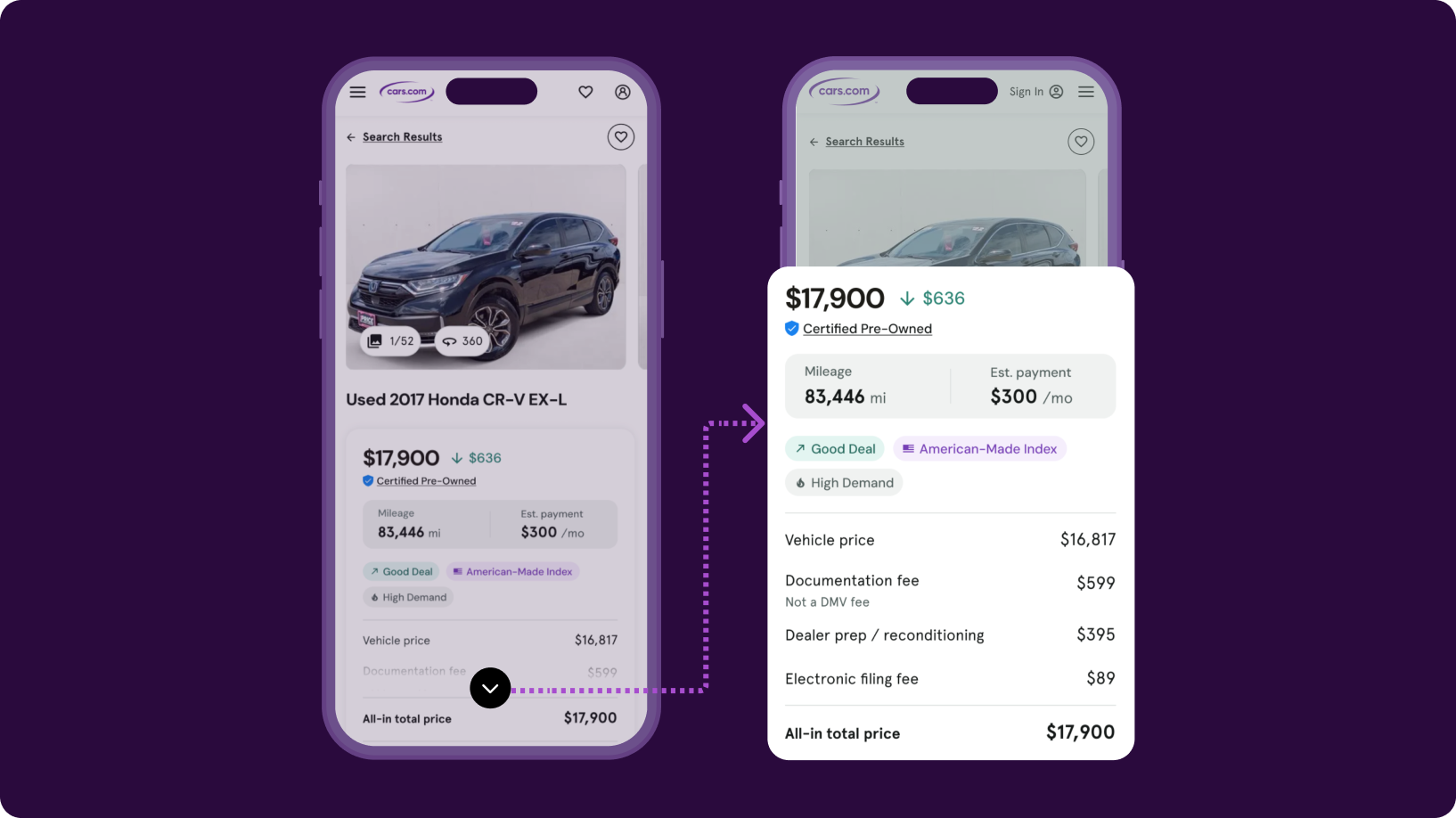
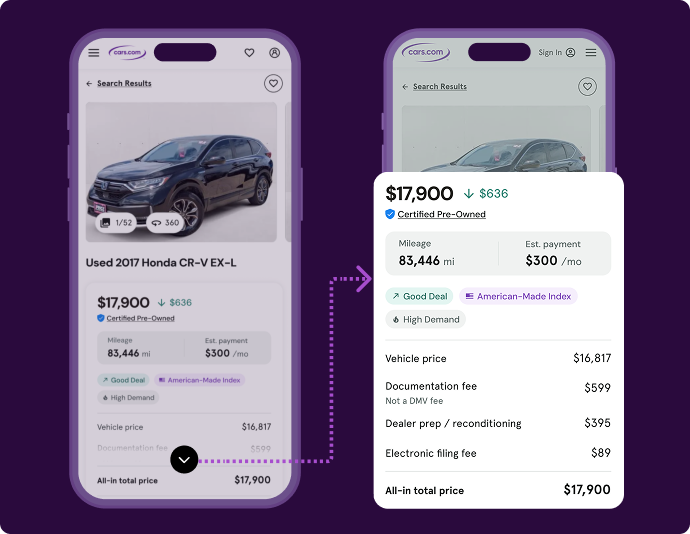
Beyond showing this information up front, it’s important to carry it all the way through to the deal. Price transparency should be an operational commitment, not just a listing decision. Posting a total price online and then recreating friction at the desk doesn’t solve the problem. It just moves it to the worst possible moment, when a shopper who was ready to buy becomes a shopper who feels misled.
Dealers who earn trust through price change the entire character of the conversation. When shoppers trust the number they saw online, they stop looking for the catch. The negotiation compresses. The experience improves. And the shopper who felt confident walking in is the one most likely to leave satisfied — and to say so in a review.
2. Present an honest, up-to-date view of vehicle condition
A vehicle history report answers questions about the car’s past: accident history, ownership, service records. But what shoppers are really asking, and what most listings still don’t answer, is what condition the vehicle is in right now. History tells you what happened to the car, but it doesn’t tell you what you’ll find when you show up.
Recognizing this gap, Cars.com developed Dealer Verified Listings to proactively show shoppers the vehicle’s condition before they ever make contact. This certification, unique to Cars.com, allows dealers to conduct an inspection that includes detailed disclosures of the vehicle’s body, glass, interior, tires, wheels, aftermarket modifications, and more.
A complete Verified Condition Report is available directly on the VDP before the shopper ever visits. Verified vehicles earn a badge in search results and on the VDP. Plus, vehicles with the badge earn a boost in search rankings.
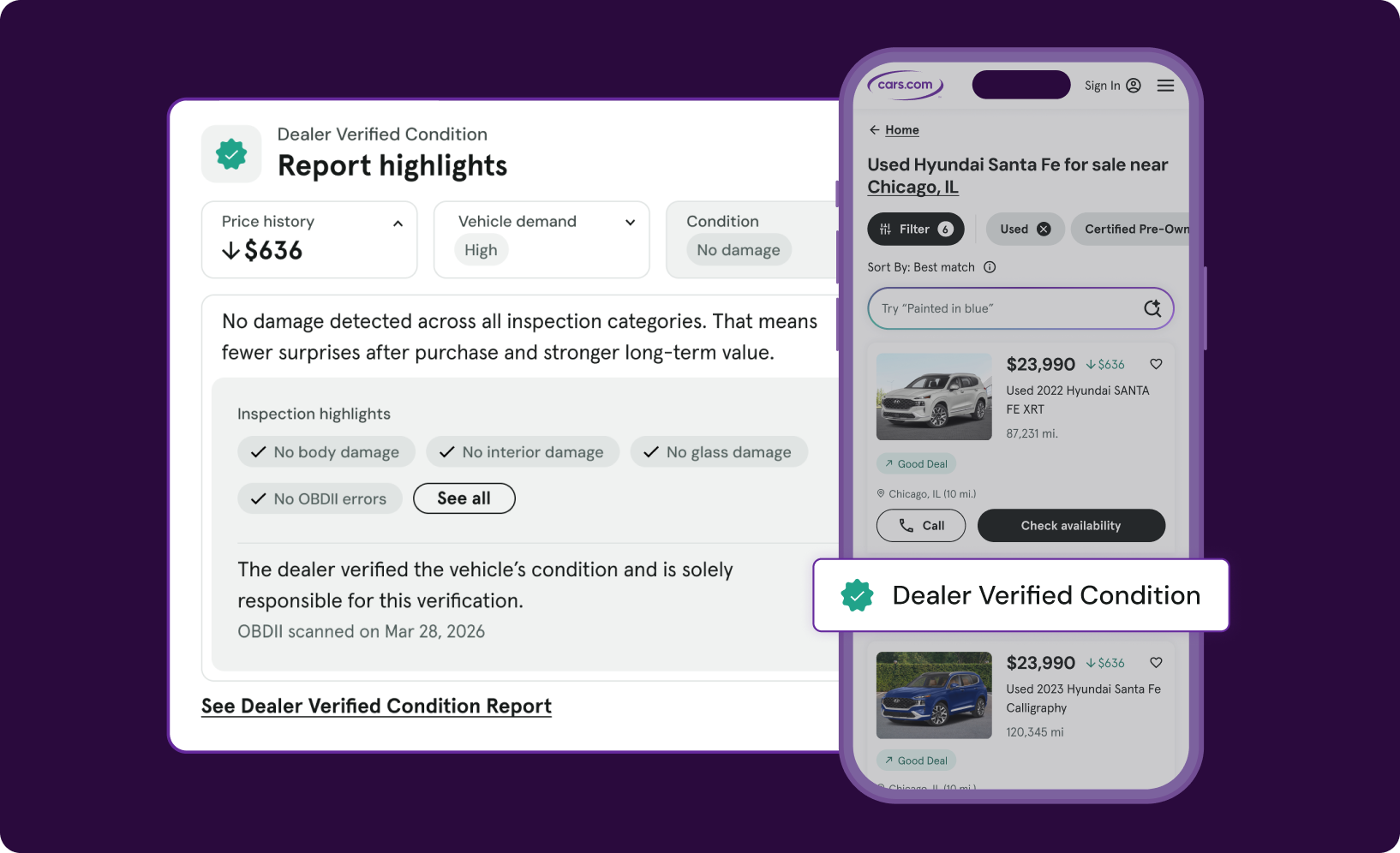
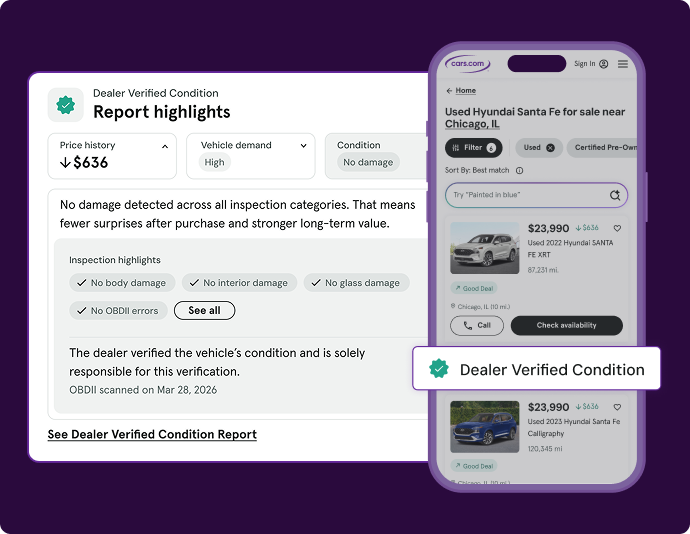
A thorough inspection and complete disclosure are what make Dealer Verified Listings work. A dealer who discloses a known cosmetic flaw up front isn’t undermining the sale. Instead, they’re demonstrating exactly the kind of transparency that builds shopper confidence. A shopper who arrives knowing what to expect is far more likely to move forward than one who feels surprised on the lot.
Cars.com shopper survey data backs up the importance of Dealer Verified Listings:
- 82% say a verified vehicle condition report is very or extremely important to feeling confident enough to move forward with a purchase.2
- 82% say they would be more likely to click a listing with a Verified Condition badge.2
- 67% say Verified Listings would make them at least moderately more confident in a vehicle’s quality and condition, before they’ve even made contact.2

Pro Tip: Back up the condition report with detailed interior and exterior photos. The report tells shoppers what to expect. The photos prove it.
3. Build trust through reputation signals
The vehicle listing answers questions one and two. Question three is about the people behind it. Shoppers want to know who they’re buying from before they commit to making contact, and reviews are the most direct answer to that question.
This goes beyond overall dealership star ratings. Shoppers increasingly want to vet the specific person they’ll be working with. Salesperson-level reviews let them do exactly that, and the impact is measurable. Shoppers who choose a salesperson on Cars.com before visiting are 87% more likely to close.3 A shopper who’s already decided who they want to work with walks in with a different mindset than one who’s still uncertain about the experience ahead.
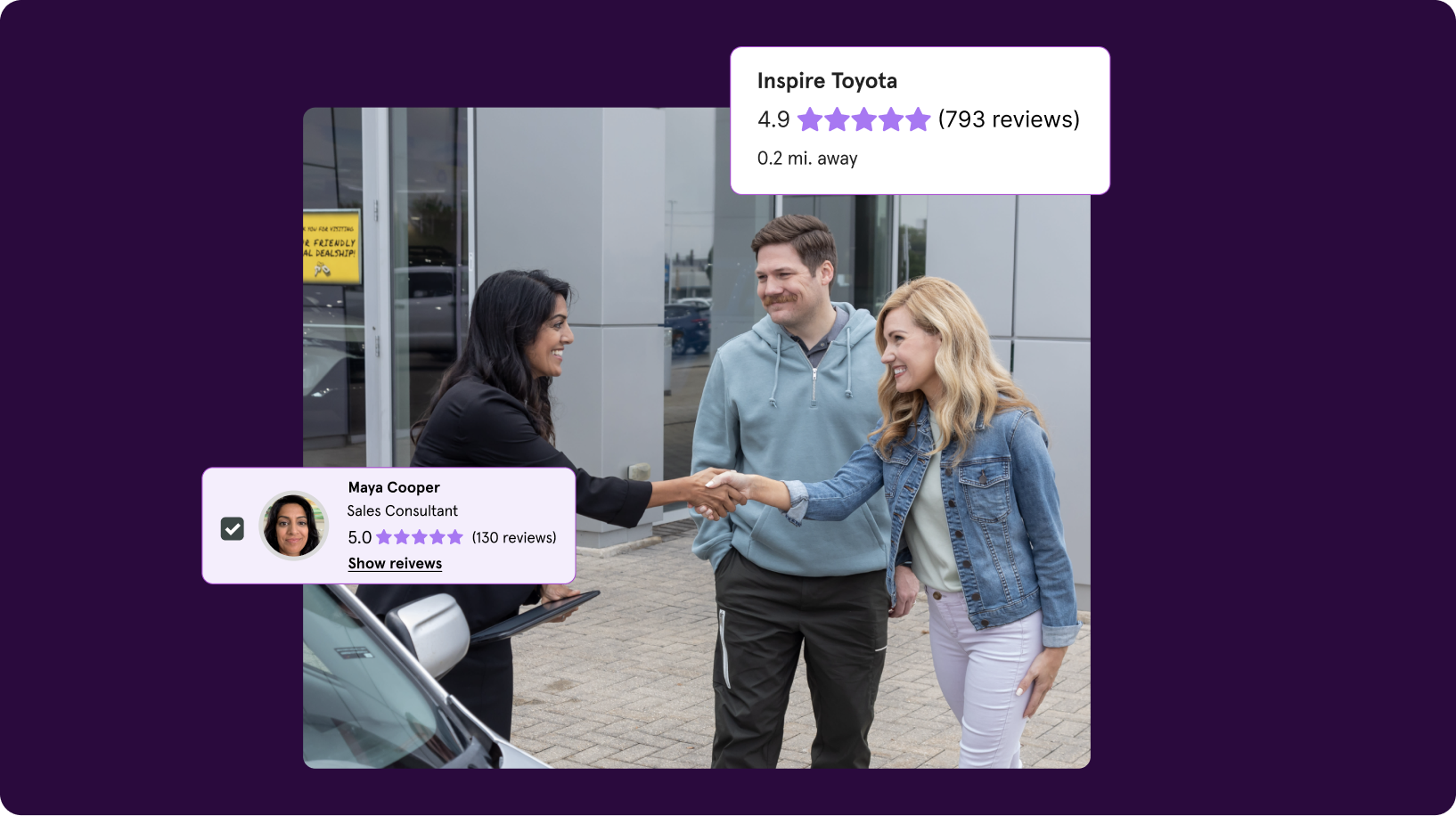
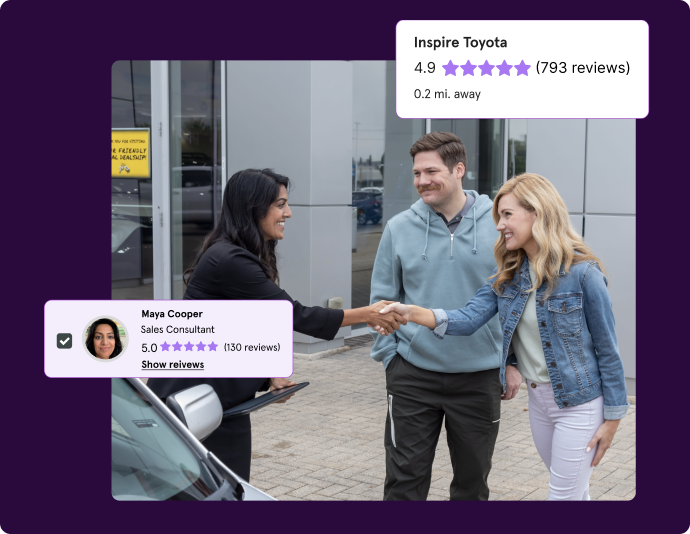
Review volume and recency both matter for dealerships. Strong ratings from six months ago tell a shopper something, but fresh reviews from last week tell them more. Automated review building keeps that signal current, generating a steady stream of feedback that reflects today’s experience rather than last quarter’s. And responding to reviews, including the occasional critical one, signals to every future shopper reading that page that the dealership takes its customers seriously.
Transparency drives deals
When questions about price, vehicle condition, and dealer reputation are answered before a shopper reaches out, they arrive informed, confident, and ready to move. That’s not just a better shopper experience — it’s a shorter, more profitable sales process for everyone involved.
Dealers who build transparency into their process systematically, not as a reaction to a bad review or a lost deal but as a deliberate strategy, compound that advantage over time. Every verified listing, every honest price, and every fresh review build shopper trust and confidence.
So don’t risk getting filtered out of search results by not providing enough information. The dealers winning leads and closing deals are answering every question before it’s asked and turning the listing into the first step of the sale.
Give shoppers every reason to say yes
Make your listings work harder with transparent pricing, verified condition, and a reputation that sells for you. Connect with our team to see how Cars.com can help you close the trust gap and convert more shoppers before they ever reach out.
1 Capital One Car Buying Outlook, 2025
2 Cars.com Community Survey, June 2026
3 DI website GA4 data, Q2 2025

)